
Progress Is Possible: The Firefly Approach to Supporting Kids With Dyslexia

If you've noticed that your child struggles with reading homework that takes far longer than it should, the same words disappearing and reappearing as if they were never learned, or understanding everything when you read aloud but falling apart on their own you're not alone. For many parents, that quiet worry is the beginning of a longer journey toward answers and support.
Dyslexia is a language-based learning difference that affects how the brain processes written words. It has nothing to do with intelligence or effort. Dyslexia is not uncommon, and evidence-based instruction exists. With the right support in place, children can build real literacy skills, regain confidence, and stop dreading the page.
Supporting kids with dyslexia starts with understanding what's really going on and knowing that progress is absolutely possible.
What Parents Usually Notice First
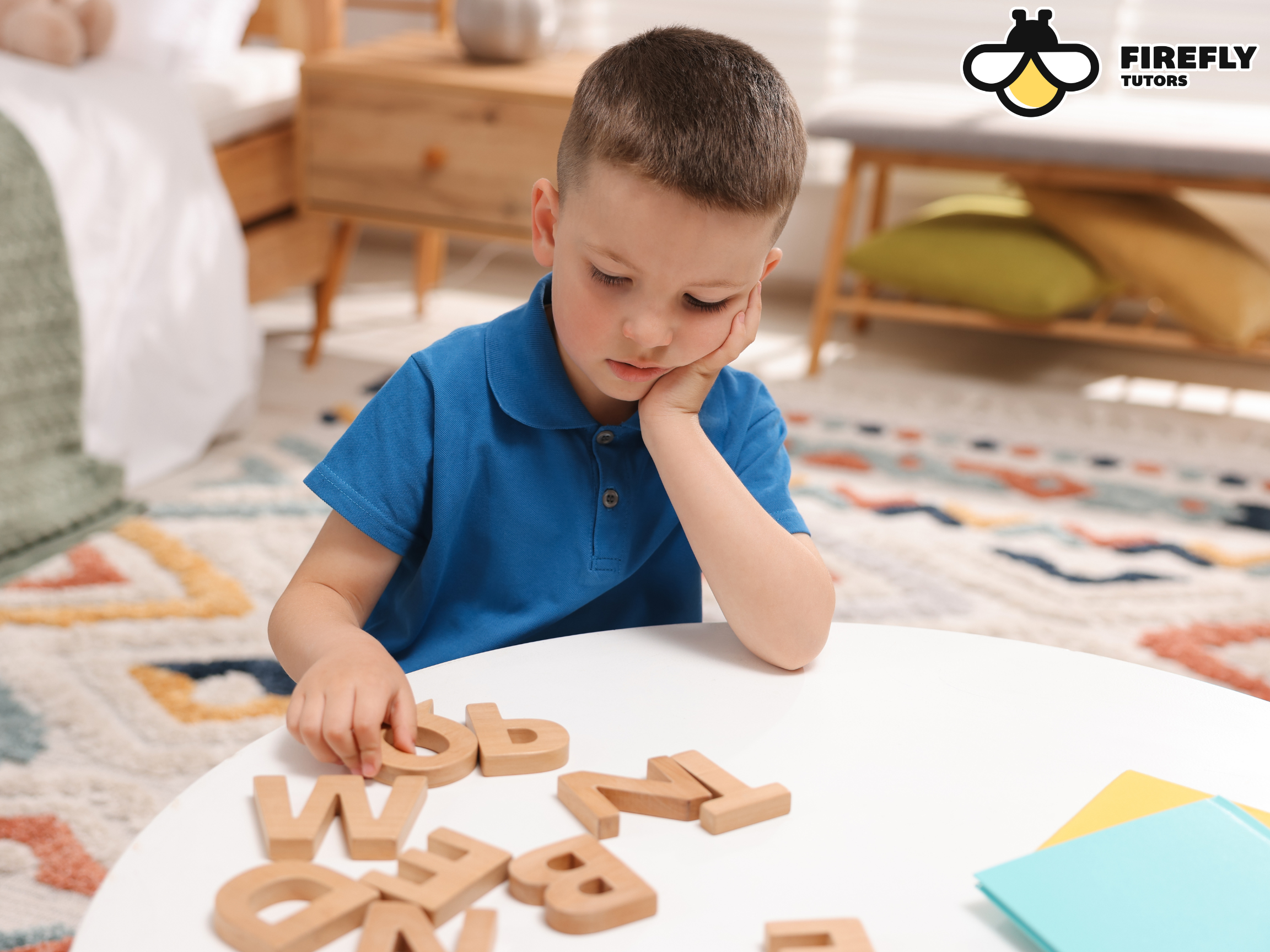
Most parents don't arrive at the word "dyslexia" right away. They just notice something feels off. A child who understands a story when it's read aloud but struggles to read the same story independently may be showing an early indicator worth exploring. Other common signs include:
- Difficulty sounding out unfamiliar words, relying on guessing instead of phonics
- Inconsistent spelling of words the child has seen many times
- Slow or halting reading with frequent pauses on simple words
- Strong comprehension when listening, but significant struggle when reading independently
- Avoiding reading, especially out loud
Only a qualified professional can evaluate and diagnose dyslexia. But when several signs appear together and persist over time, it's worth speaking with your child's teacher or doctor, and support can begin before every answer is in place. For a deeper look at what to watch for, our guide on recognizing dyslexia in children is a helpful starting point.
What Effective Dyslexia Tutoring Looks Like
Supporting kids with dyslexia means choosing the right kind of instruction, and not all reading support is created equal. For students with dyslexia, the most effective approach is structured literacy, a framework that teaches the building blocks of language explicitly, systematically, and cumulatively. It doesn't assume children will pick up patterns naturally; it teaches them directly.
Structured literacy is widely recognized as one of the most effective approaches for students who struggle with reading. At Firefly Tutors, every session for a student with dyslexia is built around this framework with clear routines, guided practice, immediate feedback, and instruction that builds layer by layer. Nothing new is introduced until the foundation beneath it is solid.

The Role of Multisensory Learning
Children with dyslexia often learn best when more than one sense is engaged at a time. Connecting visual, auditory, and kinesthetic pathways simultaneously helps the brain build stronger, more lasting connections to letters, sounds, and words.
In a Firefly session, this might look like moving letter tiles into sound boxes, tracing letter shapes while saying the sound aloud, color-coding syllables to make word structure visible, or building and manipulating words physically rather than just reading them on a page.
Firefly Education Consultant Tyler Cunningham explains why this matters:
"Dyslexic students are often visually oriented using color coding and working with the shapes of words are often ways to cater to their strengths."
Firefly tutors don't just target areas of difficulty. They look for what a student does well especially visual and spatial strengths and use those strengths as a bridge to build reading skills.
Confidence Is Part of the Work
For many children with dyslexia, the academic struggle is only part of the story. Years of working harder than classmates just to keep up can leave a real mark on how a child sees themselves as a learner. Rebuilding that self-belief isn't a side effect of good tutoring. It's a goal in itself.
Firefly tutors track and celebrate incremental progress, normalize mistakes as part of learning, and consistently highlight each student's strengths. As Tyler puts it:
"Dyslexia is often associated with better visual skills and spatial reasoning. Dyslexia is not just a blockage it can often make a student more equipped for certain fields of study."
It's worth remembering that a dyslexia classification in school is designed to open doors to support, not place a ceiling on what a child can achieve.

Supporting Your Child at Home
Tutoring works best when it's reinforced at home. Parents don't need to become reading teachers, but consistent, low-pressure engagement with language makes a real difference.
Simple ways to support reading at home:
- Short, regular reading sessions — even 10 to 15 minutes a day adds up
- Reading together — taking turns or listening to audiobooks alongside print
- Sound-based word games — rhyming and word chains make phonics playful
- Real-world literacy practice — reading menus, signs, or grocery lists counts
- Praise for effort, not perfection — progress matters more than getting it right every time
For families with children who have an IEP, understanding the rights and services your child is entitled to through school is one of the most powerful steps a parent can take.
The Firefly Approach to Supporting Kids With Dyslexia
At Firefly Tutors, supporting a child with dyslexia means combining research-backed instruction with genuine patience and encouragement. No two dyslexic learners are alike, and one-on-one tutoring allows tutors to adapt pacing, revisit foundational skills when needed, and move forward only when a concept is truly secure.
Families can choose in-home tutoring for a personal, face-to-face experience or online tutoring for flexibility that fits your schedule. Firefly also works with families accessing state-funded tutoring options that may help cover the cost of support.
Moving Forward
Dyslexia does not reflect intelligence or limit potential. It reflects a difference in how the brain processes language and that difference responds to the right kind of instruction.
If your child is struggling with reading, you don't have to wait for every answer before taking the next step. Thoughtful, individualized support can begin as soon as a need is recognized, and it can shape your child's feelings about learning for years to come.
Reach out to Firefly Tutors to learn more about supporting kids with dyslexia and how personalized one-on-one instruction can help your child build the skills, confidence, and momentum they deserve.

